Don’t talk about it

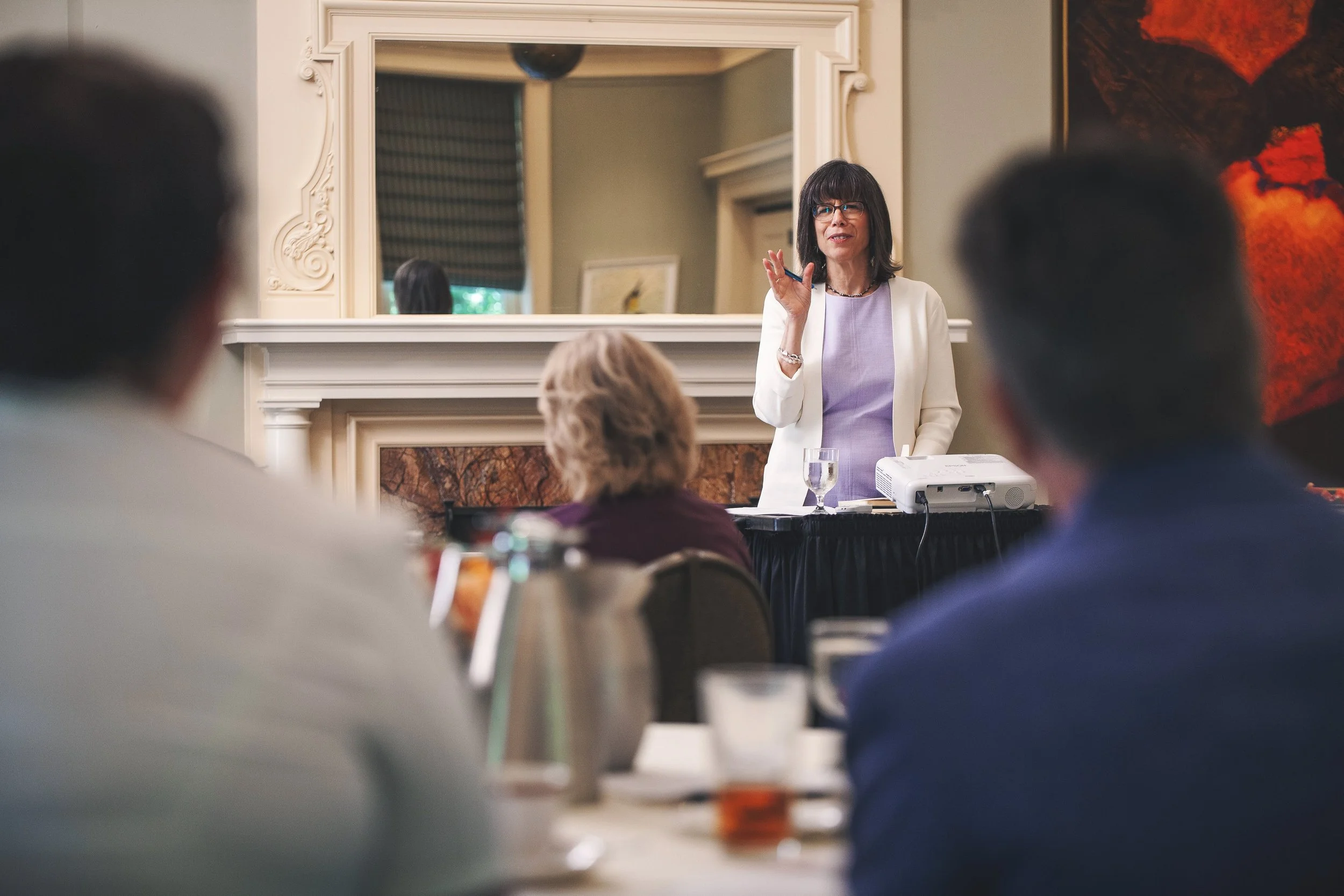
I teach artists how to talk about their work. In fact, that’s what I’ll be teaching next Saturday for RACC. (The Artist Talk: How to talk to anyone, anywhere about your art.)

But as much as I believe in the incredible value of articulating what you’re up to with your art, I know that sometimes, with a project in its nascent stage, it’s best to shut up.

Talking about a work that’s germinating (a stage which can last weeks, months or years) is often the best way to dispel its energy. You find that you’ve talked about it so much that you don’t need to release it on the canvas or on the page anymore.

Keeping it under wraps, known only to you and perhaps no one else, reserves its essential energy, energy which it needs as it grows into itself. This energy may even feel like a tension that you want to release by conversing about it. Don’t. Keep quiet and release it back into the project.

A few weeks ago, I had the good fortune to take a walk in the Pearl District with author David Shields before his reading at Powell’s.

“What are you working on?” he asked.

“A novel,” I said.

“What’s it about?”

Silence.

“I can’t tell you right now,” I said, a part of me wishing I could say something that would dazzle him. But I knew better.

“Wow. That must mean it’s going really well.”

“Yeah,” I said, smiled and didn’t say another word about it.

So, next time somebody asks: “What are you working on these days?” Bite your tongue. Especially about that germinating project. Talk about another project. Or tell them you’re working on something secret – they will be salivating to know more. That may be the fastest way to build an eager audience.

In the meantime, if you have a project you DO want to talk about, join me Saturday, May 4 for The Artist Talk. Here’s a discount code to use when you register: 2013PRESb

Share this post: FacebookTwitterLinkedInGoogle+

A rejection is just one “no”

I’ve had nothing but rejections lately. A story I wrote and am submitting is receiving good feedback but then “it’s just not for us.”

At times like these, I remind myself that is takes 5-20 rejections (or more!) to get one acceptance. (I’ve kept records on this and asked other writers and these are the numbers I’ve discovered.)

So, if I know I have to endure as many as 19 rejections to get one acceptance, why does it still feel hard?

I notice that when I receive a rejection I expand its meaning. Rather than just one “no” to one offer of my writing the “no” transforms into “you’re a sucky writer who will never get anywhere.”

I notice that when I get accepted, I expand the meaning of that too. Rather than just one “yes” to one piece of work, an acceptance transforms into: “I’m okay… maybe even better than everyone else.”

So, rejection or acceptance, I make it into more than it actually is.

What if I had the attitude that I was a good writer destined for great things no matter the “no” or “yes” that one piece of writing has just received?

I’d actually stay more focused on writing and submitting. The one “no” or “yes” wouldn’t tie up so much energy.

How do you deal with rejection? Does it ever feel like this? What have you discovered lately about how to handle rejection?

Share this post: FacebookTwitterLinkedInGoogle+

Why story takes precedence over Power Point

I loved this blog post by theater artist Anne Bogart on why story takes precedence over Power Point! For artists and entrepreneurs alike.

Share this post: FacebookTwitterLinkedInGoogle+

We’re the lucky ones

“What’s the point?” is how I was feeling this morning, still shell-shocked from news of two mass shootings this week. What’s the point of any of it? It seems a natural response to become quiet and still. Then, to want to retreat from a world that feels scary and chaotic. To just wait it out.

Then I thought: We’re the lucky ones. Not only because we lived, but because we are the artists. We have our paint, our words, our lyrics, our leaps, our scripts, our instruments, our voices. And they are not petty things.

Nothing stopped us from making art. Not back then and not now. We had the spark and because of our birth or despite it or by chance or struggle we were lucky enough to make art and keep making it. In some cases, it saved some lives, including our own.

So, what do we do on the dawning of this next day? We may need to be quiet and still. But when that time comes to an end, may we pick up those brushes, that pen, open the laptop, turn the lights on in the rehearsal space, take that step. Because we are the lucky ones. We need to make art and the world needs to be saved by it.

Share this post: FacebookTwitterLinkedInGoogle+

Is it time to stop calling yourself “emerging”?

Wet Sun, 42" x 70" oil on panel 2012, Shawn Demarest

Chances are you’ve been calling yourself an “emerging artist” for way too long now. Have you emerged yet?

When painter Shawn Demarest signed on for coaching earlier this year we talked about both her big vision for her career and the daily activities required to publicize her current show at the Annie Meyer Artwork Gallery in Portland, Oregon.

Recently, I asked Shawn what she remembered most from coaching and she said: “I mentioned something to you about being an ‘emerging artist’ and you looked at me and said ‘Shawn, you’re not an emerging artist anymore.’ I believed you. I took that to heart and it really stayed with me.”

Since then she completed the paintings for her current show, funded in part by a project grant from the Regional Arts and Culture Council (RACC). She’s also been awarded a four-week fellowship residency at Playa in eastern Oregon. I’ve witnessed her work grow more focused and confident as she accepts herself as a mid-career artist, no longer emerging.

Shawn and I first met in 2009 at a workshop I taught on grantwriting. Although she realized after that workshop that she wasn’t ready to apply for a grant, a few seeds were planted about how to think about a grant when she was ready to write it.

“What helped me was shifting my thinking from trying to dream up something I thought would be ‘good’ to honestly mapping out what I naturally was drawn to explore. In my case it was simply continuing on my course but painting in larger formats. This led to a series of paintings that, while challenging (and more than I would have attempted without the grant), was what I genuinely wanted to do.” In 2012, Shawn won a project grant from RACC that supported creating the series she’s showing this month. If you’re in Portland, Shawn’s artist talk will be on Saturday, November 17 at 2 pm at the Annie Meyer Artwork Gallery. The show closes November 30.

If you’re ready for the support, accountability, strategic thinking, and practical advice that come with one-on-one coaching, email gigi@gigirosenberg for details. Maybe it’s time to emerge already!

Share this post: FacebookTwitterLinkedInGoogle+

When good enough is good enough

A couple of months ago, I was looking through a file of old writing when I discovered a forgotten short story I’d written years ago and never sent out.

I read the story, standing at the open file drawer, and when I was done, I thought: “This is good.” My second thought was: “I should send it to my writing group and see if they think it’s good. They could do another round of critiques on it and make it really, really good.”

Then, in a bold moment, I thought: “No. This story is good enough. If I tinker longer, I risk shoving it back in the drawer again for another hundred years.” I sent it out, defying the advice I often give about always enlisting help with your art-making and marketing.

That story, Say His Name, won an honorable mention in Glimmer Train’s Short Short Story competition and will be published in Issue 12, the next issue, of the literary magazine PoemMemoirStory.

Sometimes the best advice is best ignored. Sometimes your own opinion is all that matters. Sometimes taking action to send your work into the world is more important than years of tinkering something to a possible perfection which can also result in the death or slow smothering of a work.

What action can you take today in the direction of your artistic ambition without consulting anyone but your own knowing self?

Share this post: FacebookTwitterLinkedInGoogle+

Don’t inoculate your ambition

Author JJ Lee spoke at the Surrey Int'l Writers Conference in British Columbia in October 2012.

“I inoculated myself against my literary ambition,” said author JJ Lee during a keynote at a writer’s conference I attended recently where he told the story of how he spent years avoiding the memoir he was both afraid of and destined to write. When he finally lost his job and had nothing else to do but write, he realized his ambition and wrote the acclaimed memoir The Measure of a Man.

His statement stuck with me for days. It made me wonder – how do artists and writers inoculate themselves against their own ambition when their ambitious projects scare them?

The word “inoculate” is so apt. It’s a word associated with protection from a disease. Perhaps this is one vaccine that hurts more than it helps. What would allow your ambition to wake up and write the book, paint the series, stage the performance that you are destined to create? Maybe what others consider a disease is for you the call to fulfill your ambition.

I think many artists inoculate themselves to some extent – after all, even successful artists tell me how scary a new project can be. Who wouldn’t be tempted to put ambition to sleep? What action can you take today to wake up your ambition and move your next project forward? I’d like to hear about it.

Share this post: FacebookTwitterLinkedInGoogle+

Devote your first hour to your art

Some days I find it excruciating to stay at my writing desk. I’m tempted to check e-mail, write a Facebook update, schedule a haircut, play fetch with the dog, anything but sit in uninterrupted silence and write – the activity I claim I never have enough time for.

So, I re-instituted the “uninterrupted first hour,” a practice I’ve used before. Perhaps I need it now as I go deeper into a new creative writing project – always scary.

I committed to devoting the first hour of my day to my creative writing wiithout checking email first. I unplug the internet and my phone. When I’m done, I email a colleague to tell her I did it. During that hour, I’m forbidden from doing anyting but writing. Because someone I admire is expecting me to keep my commitment, I do what I said I’d do. (I’ll write more throughout the day but not without interruptions that are part of my normal work day.)

I just finished my hour and I feel like I did an hour of yoga: focused, relaxed and ready to embrace the day, already accomplished and delightfully guilt-free. And amazingly, much less “distractible” from hard or scary work.

What would help you carve out uninterrupted time? Especially on those days when everything else seems more urgent than making art? In truth, making art is the most urgent, followed only by marketing art.

If you try that first interrupted hour (without checking email or Facebook first!), what will you discover? Write and let me know.

Share this post: FacebookTwitterLinkedInGoogle+

Use your superpowers for good

Waiting to cross the street yesterday with my dachshund, I tried to make eye contact with the driver to make sure he saw me. But he wouldn’t look at me. So, I didn’t move. When I leaned in to find his eyes, he stared straight ahead, stone face. I sensed a big anger in him so I didn’t move but continued to watch him. Then, still refusing to look at me, he raised his hand in an impatient gesture that said to me “Come on, already, cross the street.” So I did, feeling the punch of his anger even though we hadn’t spoken and he never looked at me. Then as soon as my dog and I had cleared his path, he gunned his SUV and roared past. I was surprised that it took me half an hour to recover from his hostility. Then I thought: we, each of us, have so much power that we can use for good or bad. I thought of times when a stranger’s kind words had lifted my spirits for a day. I thought of the superpower we use every minute, every day, sometimes against ourselves and each other, sometimes for ourselves (and our art) and for each other.

An old friend who I hadn’t seen in a 30 years wrote me recently after we had gotten together to say: “you used your superpowers for good.” I wasn’t even sure what he meant. But I appreciated this idea that we all have superpowers.

How can you use your superpower for good today? How can you harness it and make it work for your art rather than against it? How can you interact with just one other person today where your use your superpowers for good?

Share this post: FacebookTwitterLinkedInGoogle+

NEA’s Writers’ Corner

The hardest part of most grant applications is often the writer’s or artist’s “statement” about why you need the money or where you are in your career. My students often ask me how they can read other statements from successful applications. I just discovered this resource: The Writers’ Corner on the National Endowment for the Arts website. This list shows past winners and their sample work including statements. Notice how straightforward those statements are. I will definitely peruse these before writing my next one!

Share this post: FacebookTwitterLinkedInGoogle+